1Trigger
A thought feels true
A terrifying thought or feeling hits, and it instantly feels completely real and dangerous.
A practice tool for social anxiety · Not therapy
Social confidence isn't just mindset. It's thinking clearly under pressure and knowing what to say. Bridge helps you practise both through short guided CBT-based exercises.
Trusted by hundreds of people quietly doing the work
Without intervention
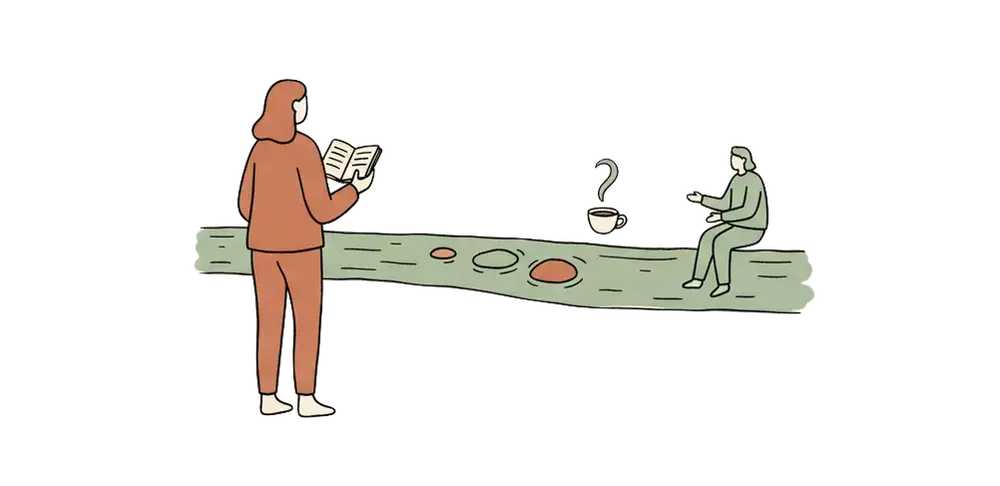
Every avoidance teaches your brain the situation was dangerous. The world gets a little smaller. Then smaller again.
A terrifying thought or feeling hits, and it instantly feels completely real and dangerous.
You avoid the situation to find relief. Your brain notes: "We survived because we fled."
Your baseline confidence drops. The exact same boundary now feels even harder to cross.
You replay the event later. The anxiety gets deeply encoded into your memory framework.
The loop reinforces itself — each escape increases the likelihood of the next.
Before
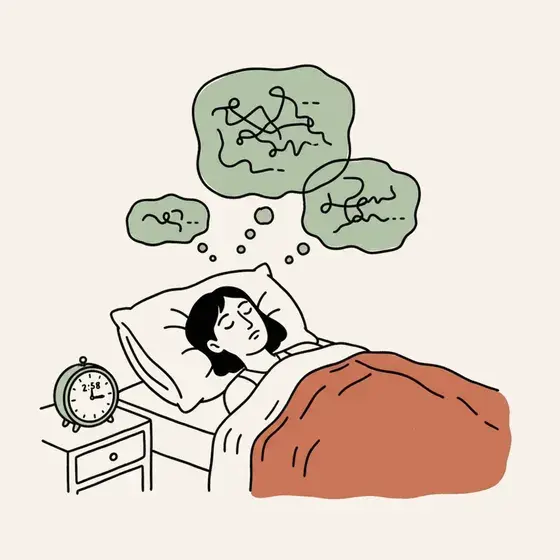
The 3am rehearsal. The cancelled-plans temptation. The “what if they ask” loop running for days.
During
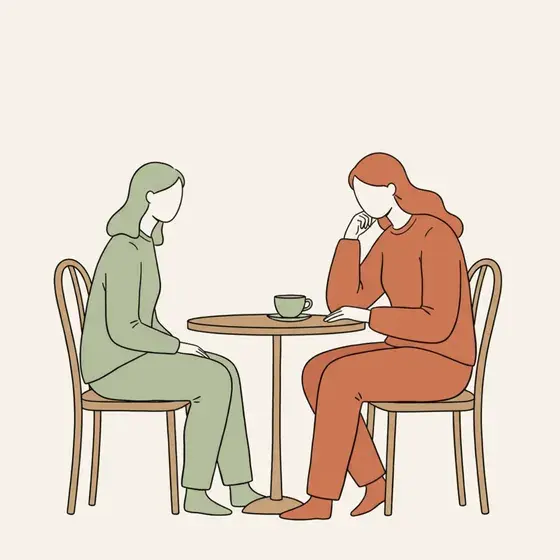
The split attention. The face you’re managing. The conversation you’re not really in because you’re watching yourself have it.

After
The replay. The specific sentences you cringe at for days. The quiet conclusion that you should probably avoid that situation in future.
If that felt familiar — Bridge was built for exactly this.
The shift
Same situations, same brain — different default reactions.
Without tools
With Bridge
No card required
Our philosophy
Understanding anxiety doesn't shrink it. Doing the work does.
Bridge is built on Cognitive Behavioural Therapy — the approach with the strongest clinical research behind it for social anxiety. We use the techniques with the strongest evidence, in a form that's actually usable on a Tuesday evening.
Three things that work together
Most apps pick one of these. Bridge does all three because that's what the research shows actually works — and because the parts amplify each other.
Anxious thoughts feel true before you've examined them. Bridge surfaces the specific thought behind each situation, then walks you through testing whether it actually holds up.
Includes
Avoidance keeps anxiety alive. Bridge helps you break feared situations into steps you can actually take — with structured preparation before, and decompression after.
Includes
Many people aren't only afraid of judgement — they're afraid of freezing, running out of things to say, or not knowing how to respond. Bridge has structured drills for that too.
Includes
Inside Bridge
Cognitive drills, exposure ladders, coping cards, verbal warm-ups, progress tracking — Bridge is the one place where every piece of the loop has a tool.
01 / 05
Tailored Tools
A modular suite of cognitive and behavioural drills, instantly calibrated to whatever situation is in front of you today.
02 / 05
Bite-Sized Pace
Rapid cognitive updates that fit your tempo. Complete a full thought loop in 5 to 15 minutes — between meetings, on the train, before bed.
03 / 05
Coping Cards
Every reframe you write becomes a card. Bridge surfaces the right one before the situation you've been dreading — not a generic affirmation, the sentence you wrote.
04 / 05
Cognitive Reframing
Spot systemic distortion patterns — mind-reading, fortune-telling, projection — so you can disarm anxious feedback loops before they harden into beliefs.
05 / 05
Active Progress Tracking
Structure a gradual exposure ladder over weeks. Bridge tracks the small evidence as it accumulates — so you can see, in writing, what your anxiety keeps trying to deny.
What a session looks like
Let's say you have a presentation Thursday you're dreading.
You open Bridge.
Not to rehearse what to say. To catch what your brain is telling you will happen.
The AI asks questions.
“What are you predicting will happen?” You tell it your fears.
Bridge surfaces those thoughts.
You sort each one: likely true, maybe true, probably distorted.
For the distorted ones, you work.
Find evidence against it. Write a more accurate version.
You write one sentence to carry with you.
Save it. You’ll see it Thursday morning.
You speak.
You notice the fear. You do it anyway.
Most sessions take 10–20 minutes. You do it once, or across multiple evenings — whatever fits.
The goal isn't insight. The goal is changing how future situations feel.
Inside a session
Each session uses the material you brought — not generic examples.
The AI conversation
What came up
Sort each thought
“Everyone will know I'm not really qualified”
Coping card saved
Your coping card for Thursday
“I prepared the material. I'm allowed to pause. Audiences don't watch as closely as my anxiety claims — most people will be checking their phones. If I lose my place, I can say ‘let me check my notes’ and move on.”
Bridge keeps your private deck — coping cards you can pull up before the situation you've been dreading.
Takes 2 minutes. No card.
When Bridge is useful
Your coping card · Thursday
“I prepared the material. I'm allowed to pause. Audiences don't watch as closely as anxiety claims.”
Bridge helps you prepare your head — not just rehearse what to say. The sentence you wrote sits waiting for the moment you need it.
Process interactions objectively — using the same questions every time — before rumination rewrites the memory in anxiety's favour.
Each rep changes how the next situation feels. The numbers move slowly, then — somewhere around week 6 — noticeably.
The lessons
Why avoidance strengthens fear.
Why anxious predictions feel convincing.
How rumination keeps anxiety alive.
Where to interrupt the cycle.
Why confidence follows action, not the other way around.
Short lessons. Plain language. No homework.
Privacy
Only you can see your answers.
Your sessions are end-to-end private. No data selling, no model training, no reading what you wrote.
If the AI detects you might be in crisis, it stops the exercise and shows you crisis resources. That's the only time anything changes.
What changes over time
Pricing
The exercises you need most — pre-event preparation, post-event processing, and core reframing — are free on every plan. Upgrade only when you want deeper guidance, expanded practice, and advanced features.
No hidden fees. Cancel anytime. Prices are approximate — you'll be billed in your local currency at checkout.
FAQ
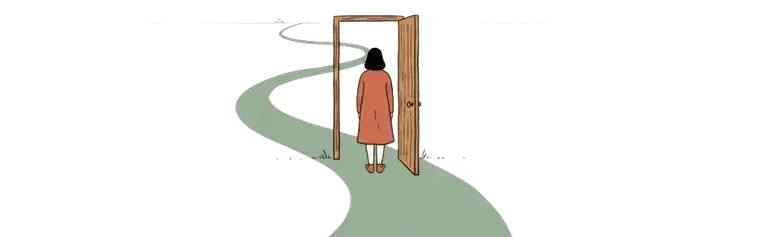
That's enough to see if this is for you.
Start freeTakes 2 minutes. No card. You can leave any time — we won't chase you with notifications.